
By J. Chadwick Schnee January 1, 2026
The Importance of Transparency in Municipal Law
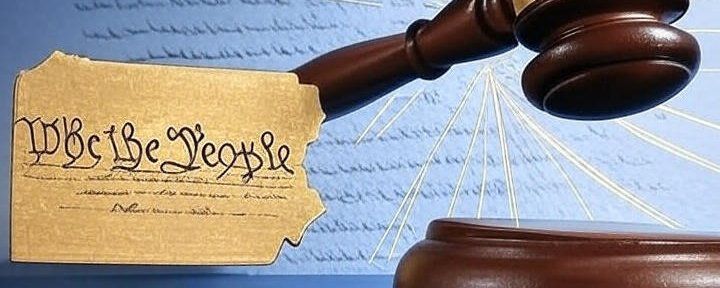
A judge 's gavel is sitting on top of a piece of paper that says we the people.
By J. Chadwick Schnee August 1, 2025
PA's Anti-SLAPP Shield: How We Won $6K+ for a Client's Free Speech Rights
By J. Chadwick Schnee June 15, 2025
Supreme Court Rejects "Background Circumstances" Rule in Title VII Cases: What It Means for You
By J. Chadwick Schnee May 15, 2025
Breaking Down the Commonwealth Court’s Ruling on RTK Law: A Closer Look at Shepherd v. Pennsylvania Office of the Governor
By J. Chadwick Schnee, Esq March 15, 2025
The Importance of Procedural Due Process: A Successful Expungement of a Mental Health Commitment in Erie County, PA
A large library filled with lots of books on shelves.
By J. Chadwick Schnee, Esq February 15, 2025
Are public libraries subject to the Right-to-Know Law? Definitely maybe.
A scale of justice sits on a wooden podium in a courtroom
By J. Chadwick Schnee, Esq January 15, 2025
As a matter of first impression, a Commonwealth Court judge has ruled that post-trial motions under Pa. R.Civ.P. 227.1 are not required in an appeal from an order in a Right-to-Know Law enforcement action. In Walker v. County of Bucks, a requester filed an enforcement action against an agency and its open-records officer where the agency had filed two appeals of the same OOR final order (rather than two appeals of two different OOR final orders), arguing that relief in mandamus was appropriate because one of the two OOR final orders was not appealed.[1] The trial court rejected the complaint, holding that relief in mandamus “is not clear at this time” due to a pending motion to substitute one its appeals.[2] The requester appealed but did not file post-trial motions. The agency argued that, under Pa.R.Civ.P. 227.1, the requester “waived all issues on appeal and her appeal must be dismissed” because she did not file post-trial motions. Commonwealth Court Judge Dumas disagreed, holding that a RTKL enforcement action “is not a situation where post-trial motions had to be filed” because the complaint in mandamus was covered by “‘petition practice’” as set forth under the Note to Pa R.A.P. 3761.[3] Instead, “it is evident that the mandamus action filed by Appellant was in petition practice, such that post-trial motions were not necessary.”[4] While this is an unreported memorandum opinion of a single member of the Commonwealth Court, parties to a RTKL enforcement action potentially may not be required to file post-trial motions in order to preserve issues on appeal. (This post should not be considered legal advice. For more information or to discuss, Attorney Schnee can be reached at chadwick@schneelegal.com ). [1] Walker v. County of Bucks, 974 C.D. 2023 (Pa.Cmwlth. Jan. 31, 2024) (Dumas, J.) (unreported). The author represents the requester in this matter. [2] Id. [3]The Note provides Pa.R.A.P. 3761(b) provides the method for seeking compliance with a final determination of the Office of Open Records in the Commonwealth Court. This differs from proceeding in the courts of common pleas, where the method to obtain judicial review of alleged failure to comply with a final determination of the Office of Open Records may be an action in mandamus or other petition authorized by local rule. Capinski v. Upper Pottsgrove Township, 164 A.3d 601 (Pa. Cmwlth. 2017). Use of this petition is appropriate when the final determination was not appealed. If an appeal was taken and the order affirmed by the Commonwealth Court, enforcement is not of the final determination of the Office of Open Records, but rather of the order of the Commonwealth Court. [4] Walker v. County of Bucks, 974 C.D. 2023 (Pa.Cmwlth. Jan. 31, 2024) (Dumas, J.) (unreported).
A blurry picture of a city street with taxis driving down it.
By J. Chadwick Schnee, Esq. December 15, 2024
The Pennsylvania Commonwealth issued a ruling on November 8, 2023 holding that an agency violated open meeting laws when it added the consideration of a collective bargaining agreement with its teachers union without first providing public notice. The case, brought by now-Senator Jarrett Coleman, alleged that the Parkland School District violated the Sunshine Act when it voted to approve a multi-year collective bargaining agreement with its teachers union when that item was not previously listed as part of a public agenda. In other words, the public had no prior notice that the collective bargaining agreement would be considered unless they happened to attend the public meeting. The case concerned 2021 amendments to the Sunshine Act that, until now, had never previously been interpreted by an appellate court. Specifically, this section, Section 712.1, provides as follows: (a) Official action.--Except as provided in subsection (b), (c), (d) or (e), an agency may not take official action on a matter of agency
A pen is sitting on top of a notebook next to a cell phone.
By J. Chadwick Schnee, Esq. November 15, 2024
Employment discrimination is a serious issue that affects many workers in Pennsylvania. If you believe you have been discriminated against in the workplace, you may be entitled to file a claim. The process of bringing an employment discrimination claim in Pennsylvania can be complex, but with the right information and guidance, you can navigate it successfully. In this blog post, we will discuss the steps involved in bringing an employment discrimination claim in Pennsylvania. Step 1: Understand the Different Types of Employment Discrimination Before you can bring a claim for employment discrimination, it is important to understand what constitutes discrimination in the workplace. Under Pennsylvania law, it is illegal for employers to discriminate against employees on the basis of their race, color, national origin, sex, religion, disability, age (40 years and older), or genetic information. Discrimination can take many forms, including: Refusing to hire, promote, or train an employee because of their protected status. Paying an employee less than other employees doing similar work because of their protected status. Firing or laying off an employee because of their protected status. Harassing an employee because of their protected status. Failing to provide reasonable accommodations to an employee with a disability. If you have experienced any of these forms of discrimination in the workplace, you may have grounds for a claim. Step 2: File a Charge with the Pennsylvania Human Relations Commission or the Equal Employment Opportunity Commission Before you can file a lawsuit for employment discrimination in Pennsylvania, you must first file a charge with either the Pennsylvania Human Relations Commission (PHRC) or the Equal Employment Opportunity Commission (EEOC). The PHRC is a state agency that handles discrimination claims in Pennsylvania, while the EEOC is a federal agency that handles claims under federal law. To file a charge with either agency, you must complete a form that provides details about the discrimination you experienced, including when it occurred, who was involved, and how it affected you. You must file your charge within 180 days of the discriminatory act, or within 300 days if the discrimination occurred in a place with its own state or local anti-discrimination law. Once your charge is filed, the agency will investigate the matter and may attempt to mediate a settlement between you and your employer. Step 3: Consider Mediation In some cases, the PHRC or the EEOC may offer mediation as an option for resolving your discrimination claim. Mediation is a process in which a neutral third party works with you and your employer to try to reach a mutually acceptable resolution. Mediation can be a faster and less expensive way to resolve your claim than going to court, but it is not always successful. Step 4: File a Lawsuit If mediation is unsuccessful, or if you choose not to pursue it, you may file a lawsuit against your employer. To file a lawsuit for employment discrimination in Pennsylvania, you must first obtain a right-to-sue letter from the PHRC or the EEOC. This letter gives you permission to file a lawsuit in court. In your lawsuit, you must prove that your employer engaged in discriminatory behavior and that this behavior harmed you in some way, such as by causing you to lose your job or suffer emotional distress. You may also be entitled to damages, such as lost wages, emotional distress, and punitive damages. Step 5: Seek Legal Representation Bringing an employment discrimination claim in Pennsylvania can be a complicated and time-consuming process. To give yourself the best chance of success, it is important to seek the assistance of an experienced employment discrimination attorney. An attorney like J. Chadwick Schnee, Esq. can help you navigate the legal system, gather evidence, and present your case in the most effective way possible. In conclusion, if you have experienced employment discrimination in Pennsylvania, you have legal rights and options. If you need to find a discrimination lawyer near you, Contact attorney Schnee at 717.400.5955 or chadwick@schneelegal.com to learn more.

Agencies beware: Injunctive relief against users of the Right-to-Know Law may be increasingly difficult under Pennsylvania’s Anti-SLAPP Statute

Agencies beware: Injunctive relief against users of the Right-to-Know Law may be increasingly difficult under Pennsylvania’s Anti-SLAPP Statute

Recently, Upper Pottsgrove Township announced that their request for a temporary injunction against local resident Matthew Murray was denied by Montgomery County Judge Saltz. The Township sought this injunction to halt what they describe as an “abuse” of Pennsylvania’s Right-to-Know Law (“RTKL”), pointing to over 100 requests filed by Murray that have allegedly cost the Township more than $55,000 in legal fees. While the Township appears to remain committed to pursuing a permanent injunction, the denial of temporary relief raises significant questions about the viability of their approach — particularly in light of Pennsylvania’s recently enacted “anti-SLAPP” statute.


The Right-to-Know Law and Injunctions: A High Bar to Clear


Pennsylvania’s RTKL, codified at 65 P.S. §§ 67.101 et seq., grants citizens the right to access public records from government agencies, fostering transparency and accountability. However, the law includes safeguards against misuse. Notably, Section 506(a) permits agencies to deny requests if they are “disruptive;” however, the RTKL narrowly defines a disruptive request as one involving “repeated requests” (as in, more than one) for the same record that have “placed an unreasonable burden on the agency.”

Here, Upper Pottsgrove Township sought an injunction in Upper Pottsgrove Township v. Matthew E. Murray, 2025-00481 (Mont. Com. Pl.) arguing that Murray’s filing of over 100 requests constitutes harassment or an undue burden, citing a purported expenditure of over $55,000 in legal fees. Yet, Judge Jeffrery Saltz, earlier this year, denied the temporary injunction, signaling that the Township failed to meet the stringent requirements, at least with respect to preliminary injunctive relief.

In Pennsylvania, a temporary injunction requires the moving party to demonstrate:

  1. A likelihood of success on the merits,
  2. Irreparable harm absent relief,
  3. A balance of equities favoring the injunction, and
  4. That the public interest supports the action.

The denial suggests that the Township may not have provided sufficient evidence of Murray’s intent to disrupt — beyond the volume of requests — or convincingly shown irreparable harm. Courts are cautious about injunctions that could restrict statutory rights, such as those under the RTKL, which may explain the judge’s interpretation of the law in this instance.


Pennsylvania’s Anti-SLAPP Statute: A Game-Changer for Requesters


Adding complexity to the Township’s strategy is Pennsylvania’s “anti-SLAPP” statute, enacted in July 2024, titled the Uniform Public Expression Protection Act (“UPEPA”). “SLAPP” stands for Strategic Lawsuit Against Public Participation — lawsuits aimed at silencing critics through legal intimidation. The anti-SLAPP law protects “public expression,” including constitutional rights for speech and to petition the government guaranteed under the United States and Pennsylvania constitutions, by allowing defendants to file a special motion to dismiss such claims early in litigation.

Murray’s Right-to-Know requests very likely fall within this protected category, as they are a form of petitioning the government for information and an exercise of speech rights. The Township’s lawsuit, seeking to enjoin further requests, could be viewed as an attempt to chill this right, and Murray could file an anti-SLAPP motion that could mandate that the Township pay Murray’s attorney’s fees, court costs and expenses.

Given the denial of the temporary injunction, the Township’s case already appears shaky, and an anti-SLAPP motion could expedite dismissal of the entire lawsuit.


The Township’s Dilemma: Legitimate Concern or Overreach?


The Township’s frustration is not without merit. Responding to over 100 requests from a single individual can strain limited resources, and the alleged amount of $55,000 in legal fees is no small sum. Section 506(a) of the RTKL offers a remedy by allowing denials of disruptive requests, but this requires concrete evidence of repetitive requests and a substantial burden. The judge’s ruling suggests the Township has not yet met this evidentiary threshold, at least for preliminary relief.

Pursuing a permanent injunction, as the Township intends, carries risks. If perceived as retaliatory, their action could trigger anti-SLAPP consequences, including fee awards to Murray. Moreover, a successful injunction might deter other citizens from filing legitimate RTKL requests, undermining transparency — a core purpose of the law.


Conclusion: A Cautionary Tale


Upper Pottsgrove Township’s bid to enjoin Murray under the RTKL reflects a clash between resource management and transparency. However, the denial of temporary relief and the protections of Pennsylvania’s anti-SLAPP statute likely will tilt the scales in Murray’s favor. As the Township presses for a permanent injunction, they must tread carefully — a failure to substantiate their claims could prove costly, both financially and in terms of public trust. This case serves as a reminder that injunctive relief against RTKL requesters is a steep hill to climb, particularly with new legal tools like the anti-SLAPP statute empowering citizens to fight back.


By J. Chadwick Schnee January 1, 2026
The Importance of Transparency in Municipal Law
A judge 's gavel is sitting on top of a piece of paper that says we the people.
By J. Chadwick Schnee August 1, 2025
PA's Anti-SLAPP Shield: How We Won $6K+ for a Client's Free Speech Rights
Show More